Blog · 6 min read
How to Make a Christmas Budget (Free Checklist)
A calm, step-by-step way to set a Christmas budget, including the costs people forget, a free checklist and a simple way to track it all in Google Sheets.
Published · SoftPlan Treasures
December has a way of quietly emptying a bank account. Not through one big purchase, but through dozens of small ones: a gift here, a box of chocolates there, an extra trip to the shops, a train ticket, a roll of tape you forgot you needed. A Christmas budget is simply a way of deciding where that money goes before the season decides for you.
This guide walks through a simple method you can set up in one evening, plus a free checklist of the costs that most budgets miss.
Step 1: Decide on one number, your ceiling
Start with the total you are comfortable spending on Christmas this year, from the first gift to the last New Year's Eve snack. Call it your ceiling.
The ceiling should come from your normal budget, not from your wish list. Look at what you can set aside from your regular income between now and December, plus anything you have already saved. If you are paying for Christmas with money you don't have yet, the ceiling is too high.
The UK's free money guidance service MoneyHelper suggests treating Christmas saving like a bill and committing to a regular amount, rather than saving "whatever is left over" (MoneyHelper: Saving money for Christmas). The same logic works for the budget itself: one clear number beats a vague intention.
Step 2: Split the ceiling into categories
One big number is hard to follow in practice, so split it into a handful of categories. A good starting set:
- Gifts for family and friends
- Stockings and Secret Santa
- Food and drink, including the big meals and the snacks in between
- Baking
- Parties and going out
- Decorations, including lights and the tree
- Clothes for parties or the big day
- Travel, fuel, tickets and parking
- Cards and postage
- Other, a small buffer for the things you can't predict
Give each category a share of the ceiling. It doesn't need to be perfect. You will adjust as you go, and that's the point: when one category grows, another has to shrink, and the ceiling stays where it is.
Step 3: Give every person a gift budget
Gifts are usually the biggest category and the easiest one to lose track of. Write down everyone you plan to buy for and give each person an amount. MoneyHelper recommends exactly this: list the people, then allocate an amount to each (source).
Then, for each person, keep track of:
- Ideas, anything that comes to mind during the year
- The chosen gift
- Where you will buy it
- Bought, wrapped and given
The moment you buy something, write down what it actually cost. The difference between "budget" and "spent" per person is what keeps the total honest. If your sister's gift came in under budget, you have a little room elsewhere. If it went over, you know it now and not on 27 December.
If you want a ready-made list for this, we wrote a separate guide to building a Christmas gift list in Google Sheets.
Step 4: Add the costs everyone forgets
This is where most Christmas budgets fall apart. The gifts are planned, but the season is full of smaller costs that never made it onto the list. MoneyHelper's own list of Christmas essentials includes cards, stamps, the tree, lights, wrapping paper, the big meal, crackers, outfits, travel and work drinks (MoneyHelper: 10 essentials to add to your Christmas budget).
Free Christmas budget checklist
Copy this list into your notes or planner and give each line a number, even if it's zero:
- ☐ Gifts for family
- ☐ Gifts for friends
- ☐ Gifts for teachers, coaches, neighbours or colleagues
- ☐ Secret Santa at work or with friends
- ☐ Stocking fillers
- ☐ Wrapping paper, tape, ribbons, tags and gift bags
- ☐ Christmas cards
- ☐ Postage for cards and parcels
- ☐ Advent calendars
- ☐ Christmas tree, stand and replacement lights
- ☐ New decorations
- ☐ The main Christmas meal
- ☐ Extra groceries for guests over the holidays
- ☐ Baking ingredients
- ☐ Drinks
- ☐ Party outfits or new clothes
- ☐ Work parties and nights out
- ☐ Travel: fuel, train or plane tickets, parking
- ☐ Taxis on party nights
- ☐ Activities: a Christmas market, a concert, ice skating
- ☐ Charity donations
- ☐ New Year's Eve
- ☐ A small buffer for surprises
Step 5: Connect the plan to real spending
A budget only works if you compare it with what actually happens. The simplest system: every time you buy something for Christmas, write it down in the right category the same day. Then look at three numbers each week:
- how much of your ceiling is already spent
- how much is still planned but not bought
- how much is left for everything else
If "spent + planned" is bigger than your ceiling, you have a decision to make now, while there is still time to choose a smaller gift, skip a party or bake instead of buying.
Step 6: Plan December by the calendar
A lot of overspending is really a timing problem. When everything happens in the last week, you pay for convenience: express shipping, the expensive tree, the gift grabbed at the till. Put the big dates in a calendar, from the first Advent Sunday to New Year's Eve, and work backwards:
- the last day to post cards and parcels
- when you will do the big food shop
- which weekend you will bake
- which evenings are already taken by parties
A December calendar with one or two small tasks a day turns a stressful month into a calm list.
Step 7: Keep it in one place
You can do all of this on paper or in a basic spreadsheet. The important part is that the ceiling, the categories, the gift list and the real spending live in one place so they can talk to each other.
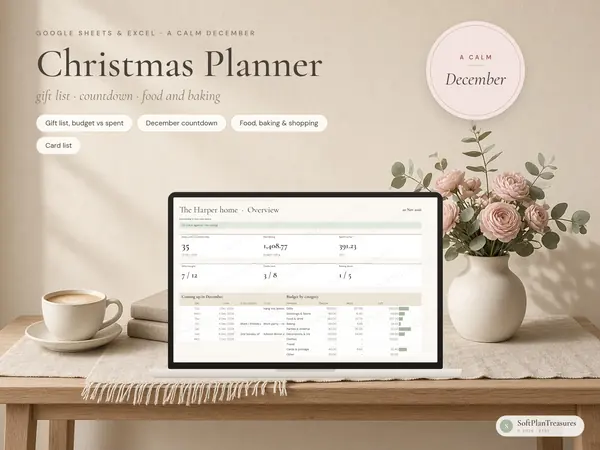
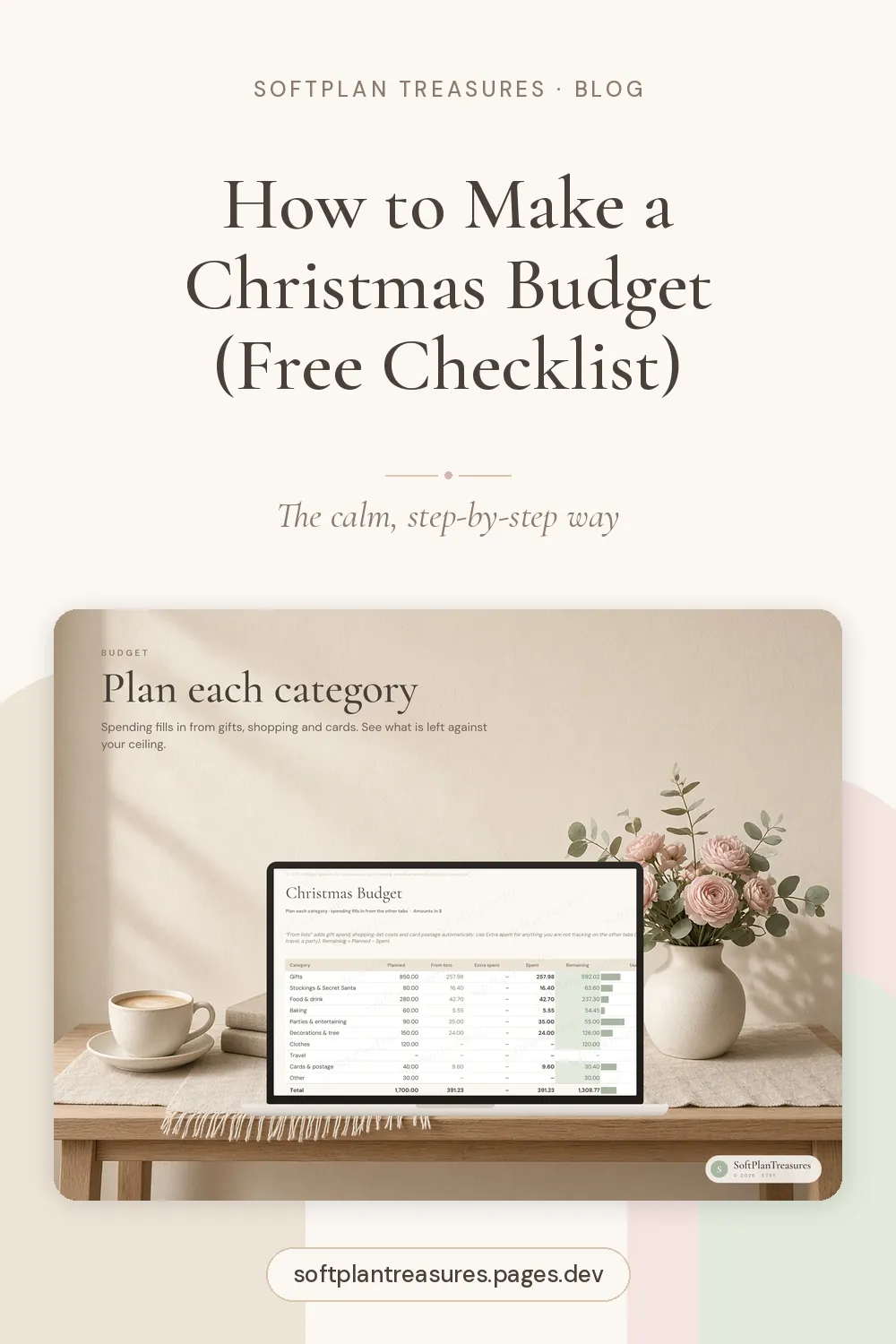
That's exactly why we made our Christmas planner for Google Sheets and Excel. The gift list, food and baking plan and card list all feed the budget automatically, and the overview shows how much of your ceiling is left at a glance.
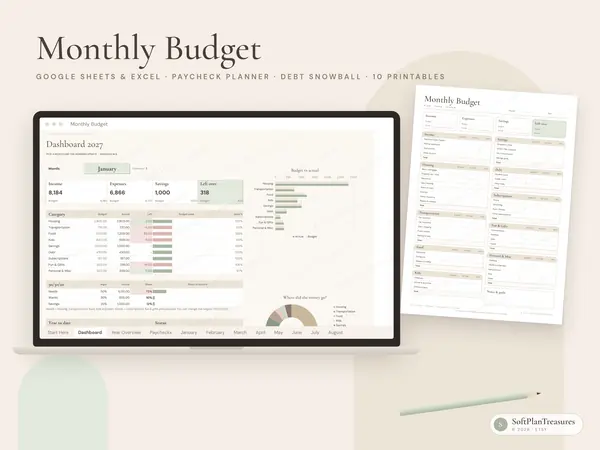
If your everyday budget is the real worry, start there instead. A monthly budget with a "sinking fund" for Christmas means next December is already paid for, a little at a time. Our monthly budget spreadsheet has sinking funds built in.
A few gentle rules that help
- Decide before you shop. Write the gift budget down before you open a single online store.
- Buy early, but don't buy twice. Mark gifts as bought immediately so you don't forget them in a drawer.
- Talk about it. Agreeing on a spending limit or a Secret Santa with family or friends can take a lot of pressure off everyone.
- Leave a buffer. Something will cost more than you think. A small "other" category means it doesn't ruin the plan.
- Start next year's fund in January. Divide this year's total by eleven or twelve and set that amount aside every month.
A Christmas budget isn't about spending as little as possible. It's about spending on purpose, so that January feels as calm as December looked in your plans.