Blog · 6 min read
Aesthetic Desk and Planner Setup
How to build a calm, aesthetic desk and planner setup: a beige desk mat, pastel highlighters, a dotted notebook, a clear organiser and a soft lamp, plus the digital planners we make ourselves.
Published · SoftPlan Treasures
This post contains affiliate links · As an Amazon Associate I earn from qualifying purchases · #ad Affiliate disclosure.
A desk does not have to be a Pinterest set to be useful. It just has to feel calm enough that you will actually sit down: a soft surface under your hands, a light you can work in, a place for the pens, and a planner you trust.
This is a simple setup for a bedroom desk or a corner of the kitchen table, built around pastel stationery and a clear, uncluttered layout. Some links below go to Amazon and are affiliate links. Links to our own planners go straight to our shop. #ad
Start with the surface
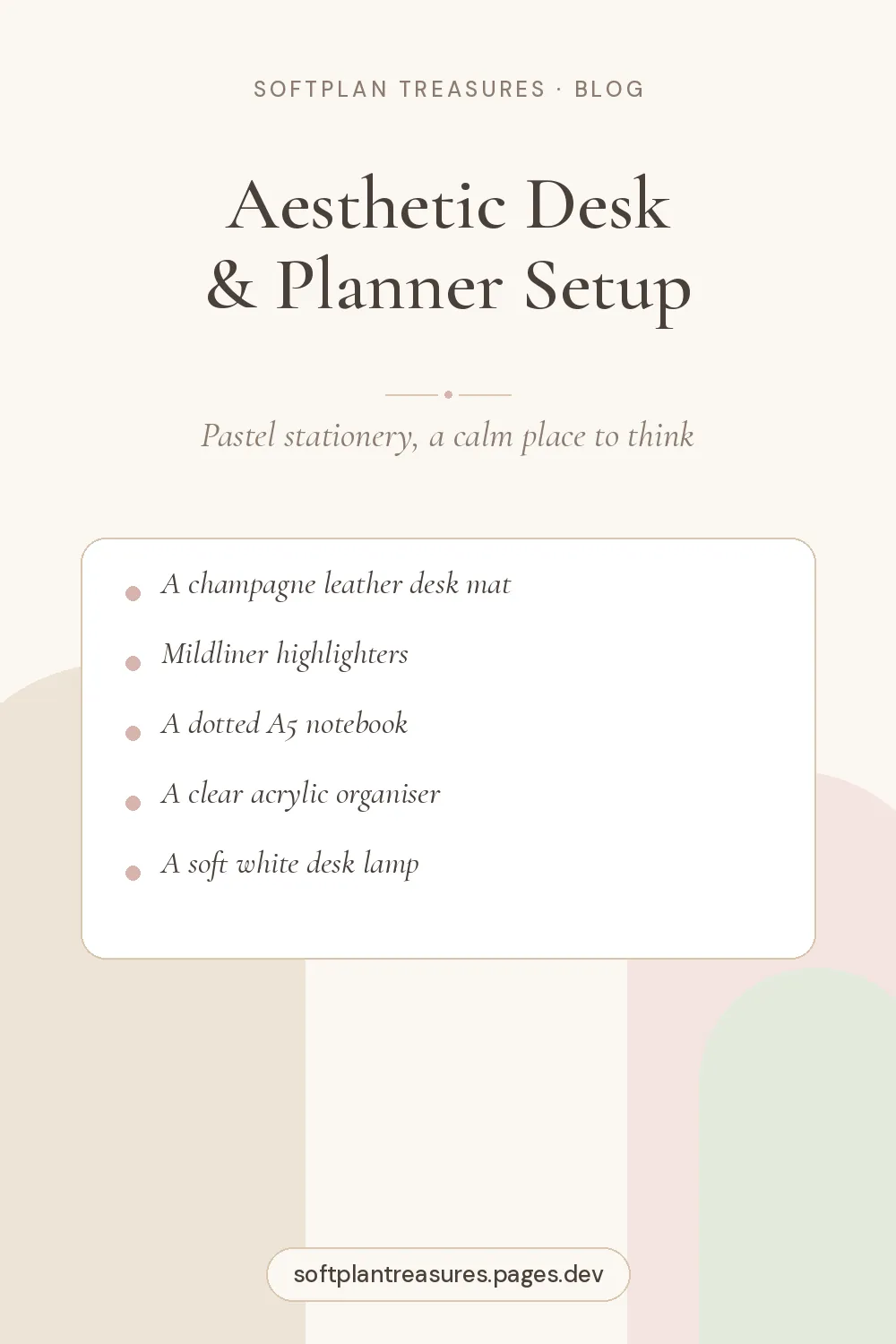
The fastest way to make a desk feel considered is to give it a mat. A large, champagne-beige leather desk pad hides a busy table, gives your mouse a quiet place to move, and makes even a laptop and a notebook look like a set. Choose a size that covers the area you actually use, with a little room on either side for a lamp and a drink.
Wipeable, waterproof leather is more practical than fabric if you also keep a coffee cup nearby. Beige and blush tones sit quietly with almost any wall colour.
Light you can work in, not just look at
A white, dual-head LED desk lamp is more useful than a decorative one that leaves you squinting. Look for touch control, more than one light mode, and a head you can tilt towards the page rather than into your screen. A timer is a small kindness if you work late and forget to switch it off.
Place the lamp on the opposite side to your writing hand, so you are not sitting in your own shadow. The rest of the desk can stay almost empty.
The pens and highlighters worth keeping out
Stationery becomes clutter when you keep twelve types of pen “just in case”. Two sets are enough for an aesthetic planner setup: a soft highlighter for marking, and a second pastel set for days when you want a slightly different tone.
Zebra Mildliners are the ones most people picture when they think of a calm planner page: double-sided, with a broad tip and a fine tip, in muted colours that do not shout through the paper. A six-colour pastel highlighter set from STABILO is a good companion if you also mark books or printed pages, because the ink is familiar and the colours stay soft.
One notebook, not five half-used ones
A single A5 dotted hardcover notebook will do more for your desk than a stack of unused journals. Numbered pages, a contents list, two bookmarks and an elastic closure sound like small details until you try to find last month’s notes. A dotted grid is the most flexible: lists, a weekly log, or a quick sketch of a table.
Anthracite, black or a soft colour all work. The point is to have one place that is not your phone.
A clear organiser, so the desk can stay empty
Pens, clips and washi tape will spread if they do not have a home. A clear, 360-degree rotating acrylic organiser keeps them visible without adding visual noise: you can see what you have, turn it with one hand, and put it back in the same place.
Keep only what you use in a week on the desk. The rest can live in a drawer. A tidy surface is not a personality trait; it is just fewer things to move before you start.
A little washi tape, used sparingly
Washi tape is optional, but it is the detail that makes a planner page feel considered: a thin strip along a weekly spread, a tab on a frequently used section, a tidy close on a gift wrap. A mixed set of pastel rolls is enough. You do not need a hundred patterns.
Use it as a tool, not as the point of the page. A calm desk already has enough colour in the highlighters and the mat.
The planner itself: paper, then a sheet that does the math
Stationery sets the mood. The planner is what you actually use. A paper notebook is perfect for lists, morning pages and a weekly log. For money, habits and a week you can see on your phone, a digital planner is often calmer, because the totals update themselves and you are not rewriting the same grid every Sunday.
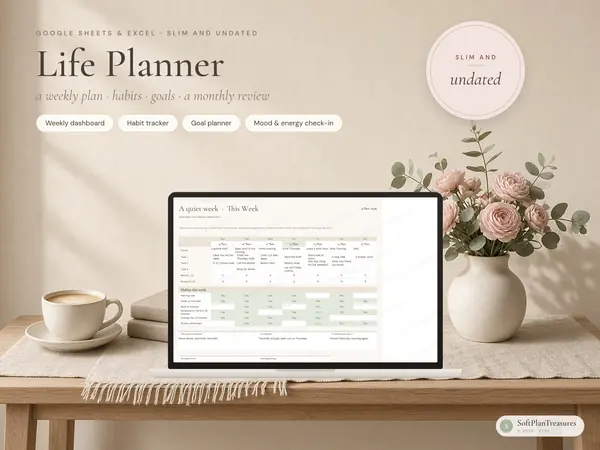
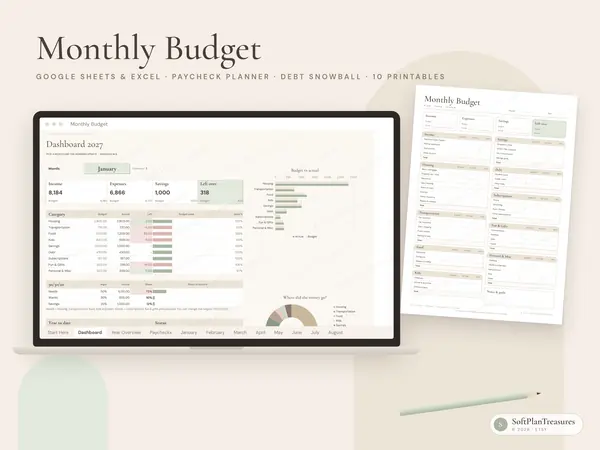
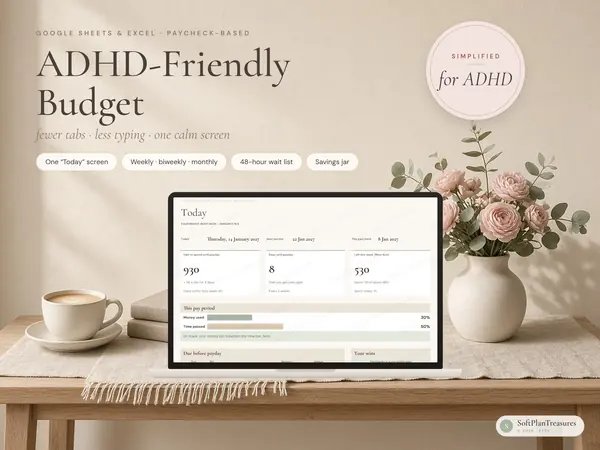
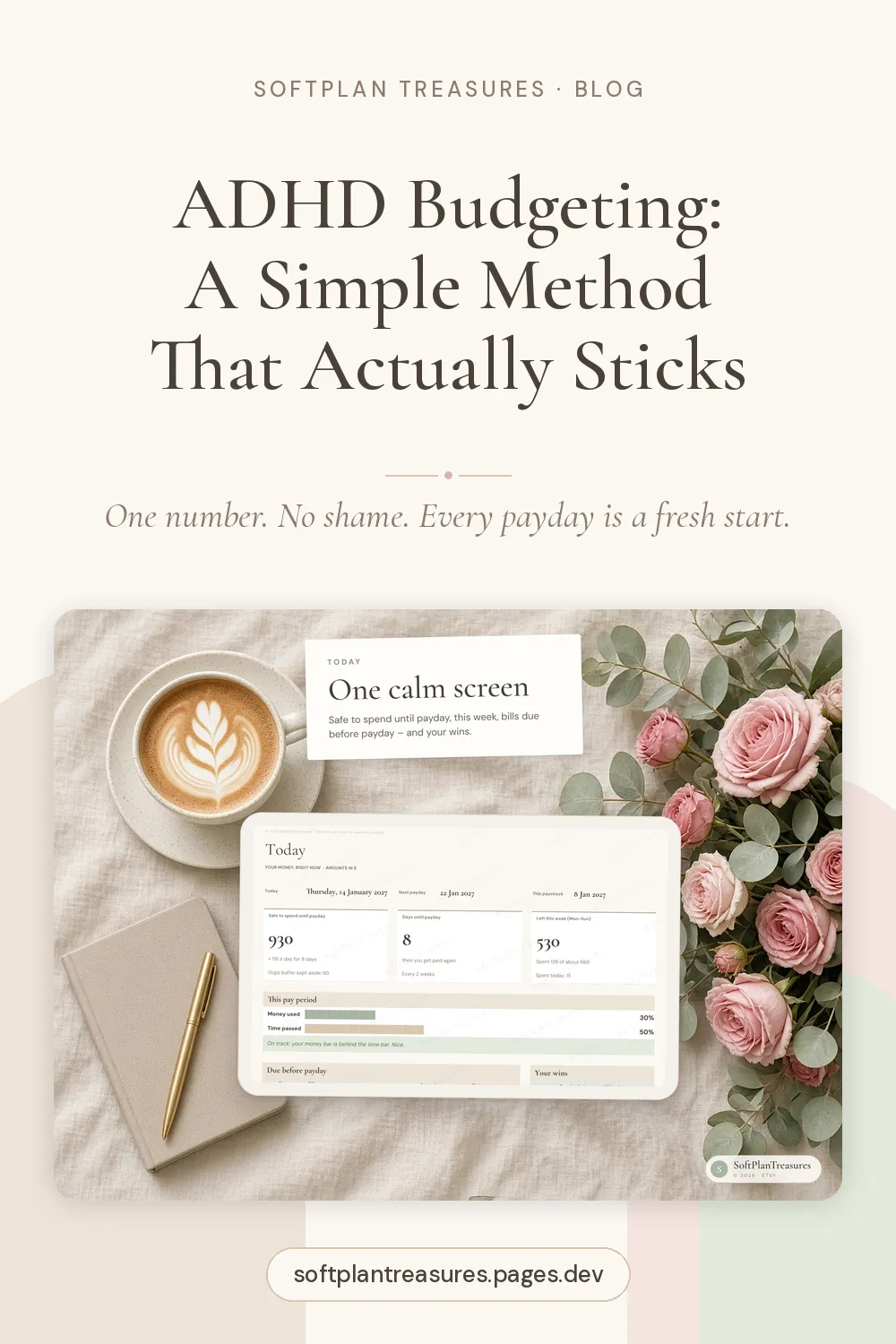
That is why we make our own. The English Life Planner is a slim, undated weekly sheet: one focus, three tasks, habits and a monthly review, in Google Sheets and Excel. If money is the thing that clutters your head, the Monthly Budget Spreadsheet has a dashboard, a paycheck planner and space for savings goals, and the Simplified ADHD Budget Planner is built around one “today” screen: what is safe to spend until payday.
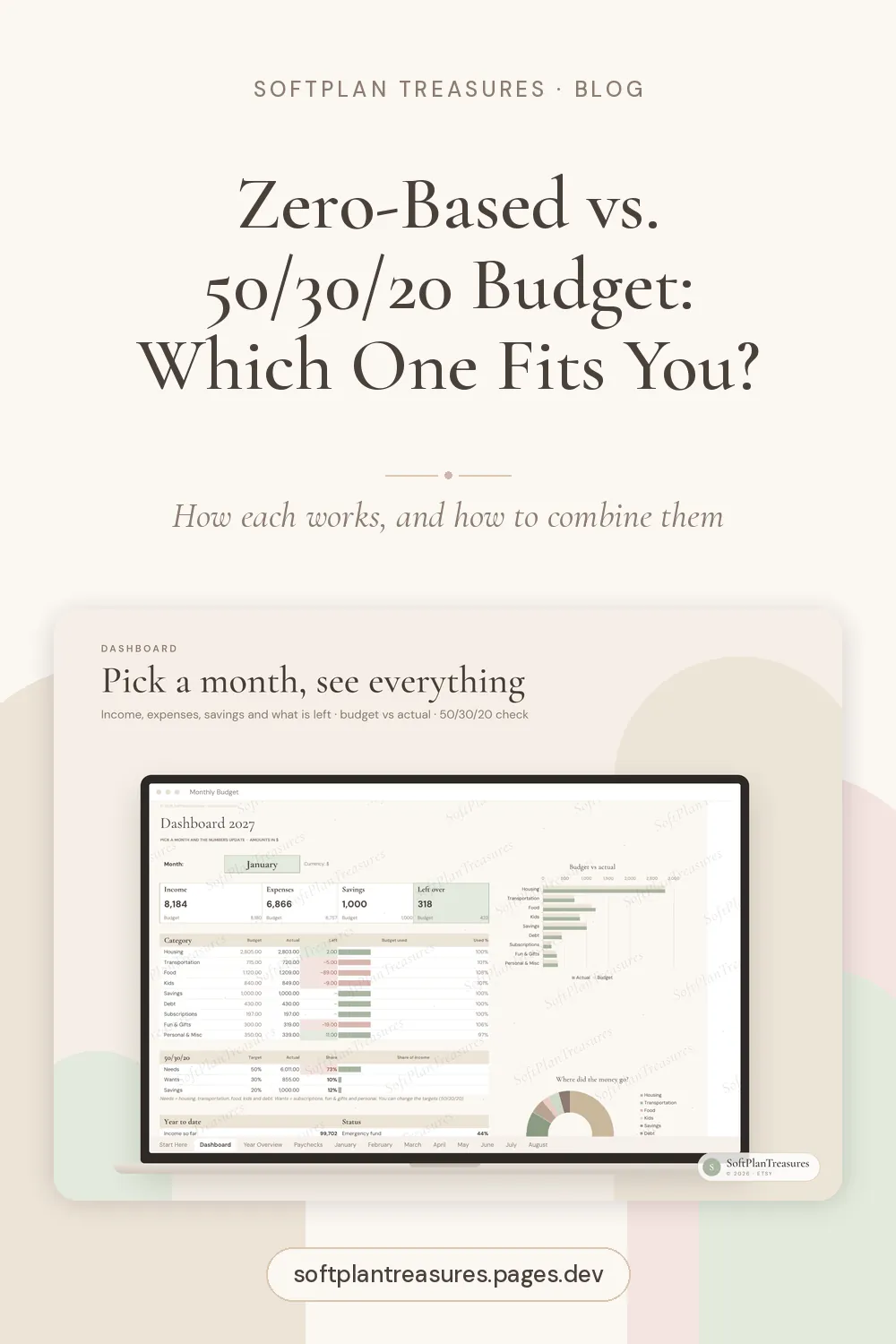
If you want the method before the template, we wrote a fifteen-minute Sunday reset and a clear comparison of zero-based budgeting and the 50/30/20 rule.
A simple layout that stays tidy
You do not need a new desk. You need a layout you can reset in two minutes:
- Leather desk mat, centred
- Lamp on the non-writing side
- Notebook and the highlighter set you are using this month, on the mat
- Acrylic organiser at the back corner, not in the middle
- Your digital planner open on the laptop, or printed for the week if you prefer paper
That is the setup. When the day is over, put the pens back, close the notebook and leave the mat almost empty. The desk will still look like a place you want to sit down tomorrow.