Blog · 5 min read
ADHD Budgeting: A Simple Method That Actually Sticks
A low-friction, paycheck-based budgeting method designed for ADHD brains, with one number to check, bills by due date, a wait list for impulse buys and no-shame resets.
Published · SoftPlan Treasures
If you have ADHD and you've tried budgeting before, you probably know the pattern. A burst of motivation, a beautiful spreadsheet with forty categories, a week of careful tracking... and then life happens, you miss a few days, the sheet becomes a source of guilt, and you stop opening it.
That's not a character flaw. CHADD, the US non-profit for people with ADHD, notes that procrastination, disorganisation and impulsivity can all create problems with finances (CHADD: Managing Money and ADHD). Most budgeting systems quietly assume the opposite: that you'll enter every receipt, remember every due date and enjoy looking at rows of numbers.
The method below is built the other way around. It asks for as little as possible, gives you one number to look at, and treats missed days as normal.
This is a practical organising method, not medical or financial advice.
Principle 1: Budget by paycheck, not by month
Monthly budgets feel logical, but money doesn't arrive monthly for everyone, and "the month" is an abstract chunk of time. A paycheck budget follows your real rhythm: from this payday to the next.
For each paycheck, ask three questions:
- Which bills are due before the next payday?
- How much goes to savings this time?
- What's left to spend until the next payday?
That third number is the only one you really need in daily life. Everything else is setup.
If you're paid every two weeks, this also solves a classic problem: some months contain three paydays. A paycheck budget simply sees an extra payday, and you can decide in advance what that extra money is for.
Principle 2: One number to check
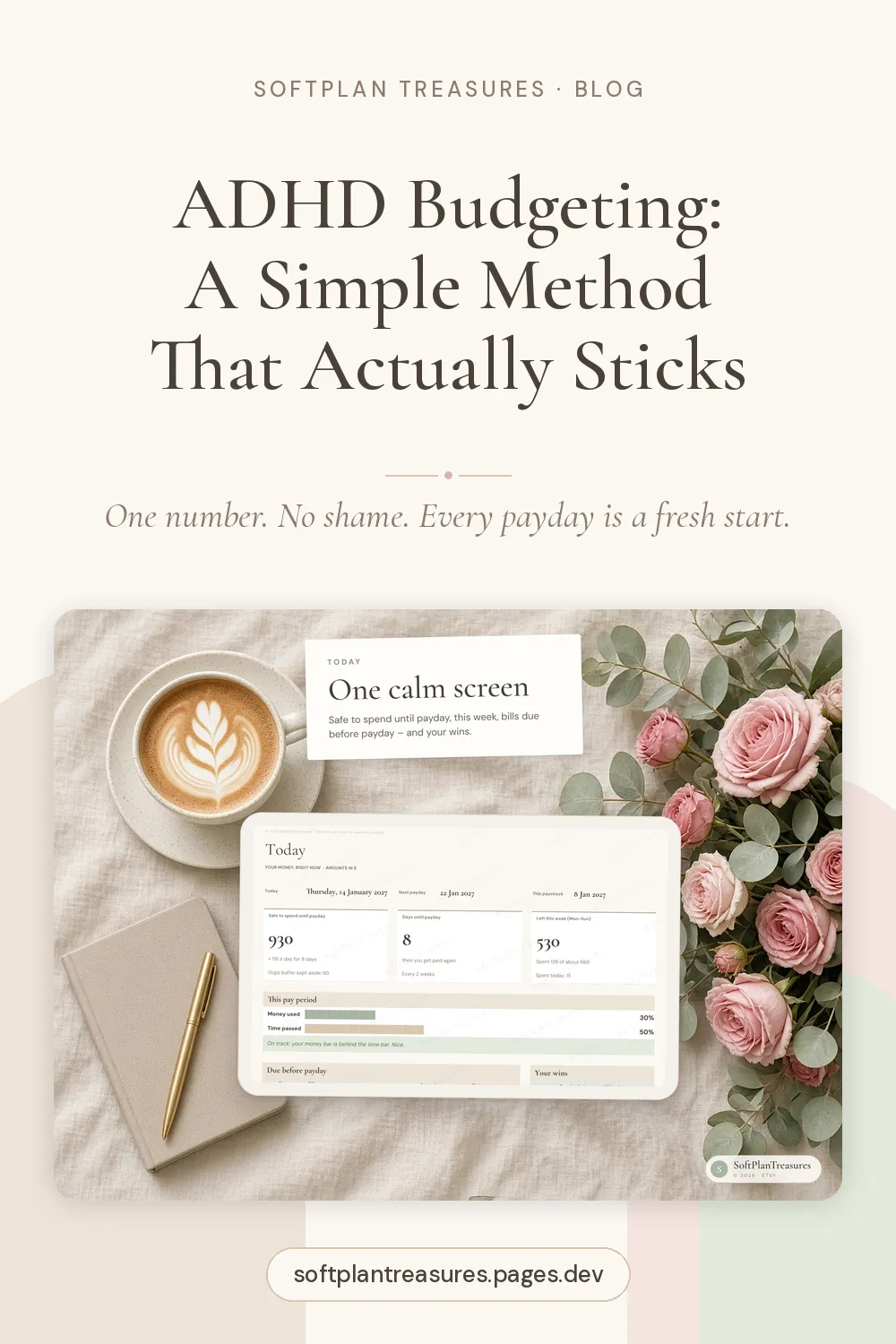
Pick a single number and make it the thing you look at. We call it safe to spend until payday:
money in your account − bills due before payday − savings for this paycheck = safe to spend
Divide it by the days until payday and you also get a daily amount. That's it. You don't need to know your exact grocery spending for the year. You need to know whether buying lunch today is fine.
Put this number somewhere you see it without effort: the first screen of your spreadsheet, a widget, a sticky note.
Principle 3: Bills by due date, not by category
Missed bills and late fees are often a bigger leak than impulse buys. Instead of grouping bills by type, list them in the order they're due, with:
- the next due date
- how many days are left
- whether it's on autopay
- which paycheck pays it
Mark autopay bills clearly so you never pay one twice "just to be safe". Then you only need to act on the ones that aren't automatic.
CHADD's own suggested routine splits money tasks into small daily, weekly and monthly chunks of a few minutes each (CHADD: Money Management Schedule). A due-date list makes the weekly check take seconds.
Principle 4: Track less, not more
Detailed tracking is the first thing to collapse. So make tracking optional:
- Track spending in a few broad buckets, not twenty categories.
- Use drop-down lists so you choose instead of type.
- If you only log once a week from your bank app, that's fine. The safe-to-spend number still works because it's based on your balance.
If you skip a week, nothing breaks. You just update your balance and carry on.
Principle 5: A 48-hour wait list for impulse buys
Instead of banning impulse purchases, slow them down. When you want something that isn't planned, add it to a wait list with the date and price. After 48 hours, look again:
- still want it, and it fits in safe-to-spend? Buy it, guilt-free.
- don't care anymore? Delete it and enjoy the feeling of money you didn't spend.
Writing it down often satisfies the urge on its own. And when you do buy, it's a decision, not a reflex.
Principle 6: Make progress visible
ADHD brains often respond better to visible, immediate feedback than to long-term abstractions. Some ideas:
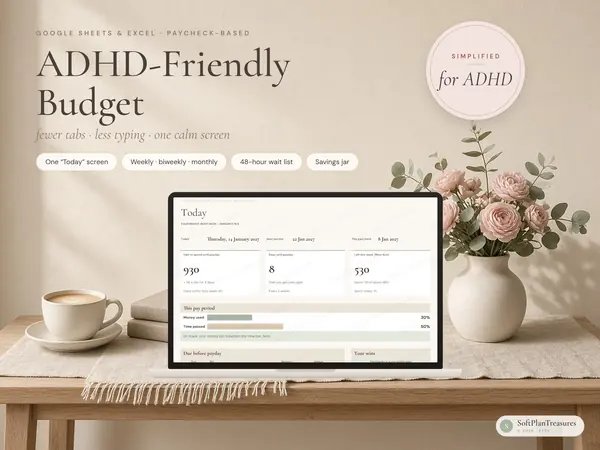
- a progress bar for "money used" next to "time passed" in this pay period. If money is ahead of time, slow down a little; if time is ahead, you're doing great
- a savings jar that visibly fills up
- check-offs for paid bills
- a streak of paychecks where you stayed within plan
These sound small, but they turn budgeting from a chore into something with a tiny reward built in.
Principle 7: No-shame wording and fresh starts
Language matters. A sheet that turns red and says "OVER BUDGET" every time you slip makes you avoid it. A sheet that says "a little ahead of the calendar" and shows the daily amount that gets you back on track invites you back.
And the most important rule: every payday is a fresh start. Whatever happened last period, the new paycheck gets a clean plan.
A five-minute weekly routine
- Open your budget and update your account balance.
- Tick off any bills that have been paid.
- Glance at bills due before payday.
- Check your wait list.
- Look at safe to spend. Done.
A ready-made version
We built our ADHD budget planner around exactly these principles: seven tabs instead of twenty, one Today screen with safe to spend until payday, bills sorted by due date with autopay markers, a 48-hour wait list, a savings jar and kind, no-shame wording. It works in Google Sheets and Excel and includes printable pages.
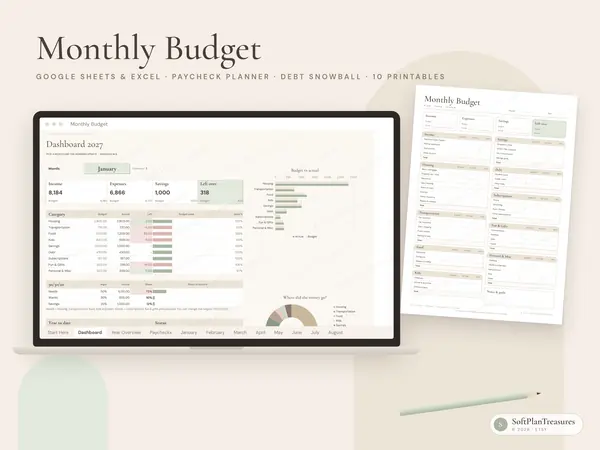
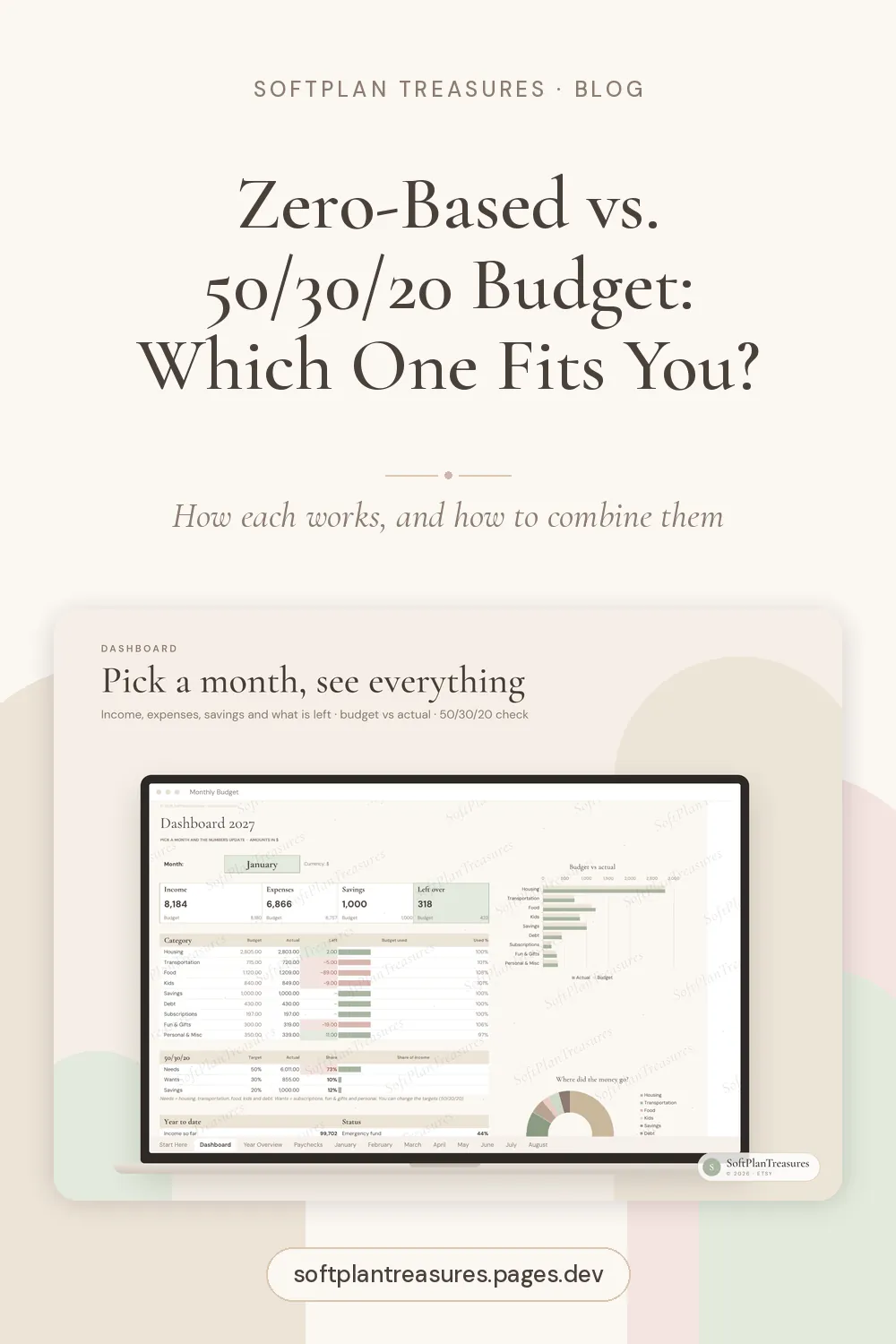
If you prefer a more detailed, classic monthly budget with debt payoff and net worth, our monthly budget spreadsheet is the fuller option. And if you're weighing different budgeting styles, read our comparison of zero-based vs. 50/30/20 budgets.
The best budget is the one you open
A budget for an ADHD brain doesn't need to be perfect. It needs to be easy to open, quick to update and kind when things go sideways. Start with one number, one list of bills and one weekly check-in, and build from there only if you want to.